Search

Grand Masters Running

Running After the Age of Fifty – A blog by Paul Jurasin

Category

General

Running Around

As I was running through Ephrata, PA in Lancaster County this morning, I was thinking about all of the different places around the United States and to a lesser extent the world that I’ve run.  I wasn’t thinking about how any of these places have stood out but rather about how much more of a personal experience one can get for a town or region on foot versus in a vehicle.  We’re in Pennsylvania this weekend for a close friend’s wedding and some other friends are here to attend the wedding as well.  We arrived a day early to to spend some time touring the Amish farmland and visiting various attractions in the area by car with them.  It was nice to spend time with our friends and to drive around beautiful Lancaster County.

This morning I spoke to the Inn Keeper at the Historic Smithton Inn where we are staying about a good 4-5 mile running route around town.  She was very knowledgeable and provided directions for a scenic tour of Ephrata.  The thing that became clear to me this morning, and I probably have noticed this before as well, is that seeing a place on foot provides a much better feel for an area than traveling by vehicle.  On foot, I am moving slowly enough to see the details of homes, yards, businesses, vegetation, schools and every part of the region I’m in.  I can even greet people I encounter on the street and get at least a brief view of their attitudes (very friendly here in PA, by the way).  When traveling by vehicle, most of this is a blur and the view we get is much more generalized and high level.

While it is certainly true that we can cover much more ground in a moving car than on foot, the depth of immersion in the local culture is much greater while running.  That’s my short and sweet thought for the day!

Back to the Roads – Tucson Marathon

ImageFall is well underway and that means the marathon bug has hit me again.  Even though I can’t seem to stop the continuous forward march of aging, it hasn’t yet reduced my desire for long distance running.  Last year at about this time, while Hurricane Sandy was finishing up the devastation she caused on the eastern seaboard, I was packing for what was to be the canceled New York City Marathon.   It took me nearly six months before I considered another long distance race but in August I did, in fact, commit to training for another marathon.  The Tucson Marathon on December 8th is the new goal.  My old Colorado training buddy has recently moved to Tucson so a marathon in the Southwest is a logical choice.  Since we’re planing to run the race together, there’s some built-in competitive incentive to keep the training up.

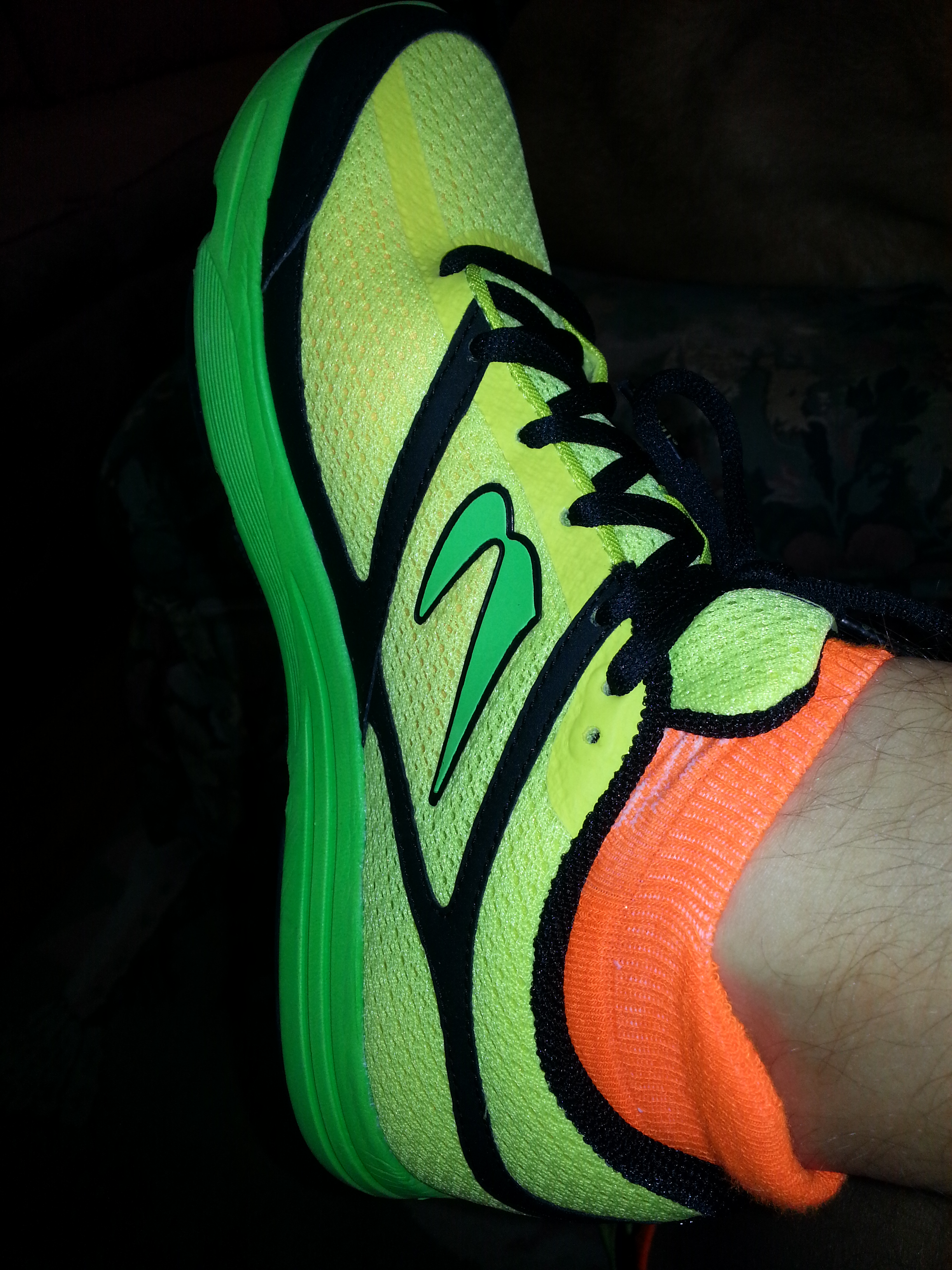
My intermediate training goal was to complete the City to the Sea Half Marathon in San Luis Obispo, California in early October.  Despite a rapid increase in training distances, the race was a success with a finish 10 minutes ahead of expected.  Even though I had some success in the race, I did nearly everything wrong in preparation.  I went from a six mile long run to a 1Image2 mile long run over a 4 week period.  I bought a new pair of running shoes the day before the race and ran the half marathon in them without ever running in them before.  I didn’t ingest any nutrition, gels or otherwise, during the race.  All bad things – and I knew it.  Fortunately it all worked out well despite myself – but that was a half marathon.  I can’t power my way through a full marathon without much more careful planning and execution.  The distance is too long and the effort is too hard to not be prepared.  It’s been 18 years since I ran the Chicago Marathon in 1995 and I’m a lot older now.  I should have much more experience behind me now and know how my body responds to the stress of training.  One of the things I plan to do is to keep at least half of my long run mileage on trails to reduce the impact of training on pavement.  In theory, this will serve me well.  We’ll see!

Stay tuned – I’ll write about how the training progresses and how the results of the preparation unfold.

What are you reading? Running or otherwise…

What people read says much about them.  It’s one of those things that’s not significantly influenced by others.  It’s an individual preference that, when looked at as a whole, provides some insight into the thinking of the person.   In general, especially from a periodical point of view, I think people read about topics that are parallel to their own views.  They want to learn more about and see what other people with the same interests have to say.  I know this applies to me.

2013-02-18 13.51.09
California Trail Running

My magazine subscriptions are few but the ones (ok, one) that I  pay for, I’m very loyal to.  I’ve had a subscription to Runners World for many years and have no plan to end it anytime soon.  Runners World is the core magazine for runners.  It contains information about food, special interest, real people, training, shoes and various other topics.  Occasionally, I’ll think it has too much information for beginning runners, but the other information is just too good for me to stop reading.  It’s the one magazine I read from cover to cover every month.

A long time runner friend recently purchased a subscription to Trail Runner magazine for me.  In the past several years, I have been doing predominantly trail running and really enjoy the relative solitude of being off road.  A big positive for Trail Runner is that it focuses less on beginner runners and more on places and trail races.  I can see it becoming another magazine that I will move into my every month reading list.

If you’ve ever been in an airport about to board a several hour flight and are looking for a good read in the newstand, what do you buy?  You’ve already got your “go to” magazines in your bag and are looking for something else…  I know I tend to migrate to the either the business or science sections.   Scientific American is always good to learn something new.  But, I have to be awake to pay attention to this one.  Though I love the magazine and the topics it covers, sometimes I don’t want to think so much on an airplane.  The Economist is another favorite of mine but again – I need to be awake to read this one.  My default if I want general information without needing to put much effort into it is USA Today.  The articles are general and it keeps me up to date on current events.

What does this say about me – Runners World, Trail Runner, Scientific American, Economist and USA Today?  Not sure, but maybe it says something that none of these magazines have anything to do with my what my every day job is.  I wonder if I’m an anomaly or mainstream from that point of view.


New Balance Lightweight Trail Running Shoes

Long distance trail runners riot when New Balance releases new minimalist trail running shoe!  Can any of you runners imagine a headline like this?  Not very likely. Runner riots are pretty rare.  But a riot did happen this week when Nike released a limited quantity of a new basketball shoe.  This is an actual headline from USA Today: 
Footlocker halts events after riot over Nike Sneaker.


New Zealand Trail
Kepler Track New Zealand

While no riot occurred, New Balance did release a new minimalist trail running shoe recently. The MT110.   I’m a big proponent of lightweight trail running shoes from New Balance having owned 8 or 9 pairs of the 100s and more recently the 101s so am hoping for another great shoe in that line.  For me, the 100s and 101s offered a comfortable, super lightweight shoe capable of running on or off road.  The thin rock plate provided enough protection to prevent foot bruises while allowing enough toe box width and flexibility for long distance running.  I have run races and training runs ranging from 5K to 60K without foot problems.  A year or so ago, I was pretty excited when New Balance announced the release of the 10 minimalist shoe which was even more lightweight than the 101.  Unfortunately, this shoe was disappointing to me.  The sole was composed of clearly defined rubber pods spaced to allow flexibility.  However, the spacing was enough to allow small stones to fit between them and without a rock plate, caused significant bruising of the ball of my foot while running on the rocky trails of Colorado.  Because I was training for a trail ultra last year at about this time, I thought I’d try a more substantial (non-minimal) La Sportiva shoe.  While the shoe was well built and looked great, it felt too heavy and constrictive after my time with the 101s.  After all that experimentation, I went back to the New Balance Trail 101s and was happy again.  I completed miles of distance training and the 60K ultra without foot problems.
With the release of the MT110s last month, I am hopeful that New Balance has come up with another winner.  I have not yet tested this new shoe but others have.  Here’s a review that I think is done very well.  Have a look:  New Balance 110 Review.

Do Runners Continue Running as they Age?

When I run in road races and look around at the participants, my gut tells me that there are plenty of runners in the 40 and older age range.  But, sometimes it’s difficult to tell the difference between a 39 and 46 year old.  I know I’ve seen some runners win awards in the 50-54 age group that I could swear were in their 30s by look and by speed.  So, I decided to do some research to see what the numbers really look like.

Running USA has compiled a mountain of runner statistics over many years and they provide some great information which is the basis of the analysis below.  In this initial view of race finisher data, I wanted to determine is the percentage of runners in races of various distances are in the Masters (40+) or older age groups.  Recent data when compared to older data should provide a hint as to whether runners continue to run when they get older or if they stop.

While there are many ways to examine the data, here’s what I found and what I think the results mean:

There were about 13,000,000 finishers in distance races in the USA in 2010.  That was a big 37% increase over 2005 and an even more impressive 50% increase over 2000.  During this time the % of Masters (40+) runners at the 5K, 10K, Half Marathon and Marathon remained stable at around 40% of the total with no more than a 2-3% variance over the 2000 to 2010 period.  Because the percentage difference between the number of finishers in the under 40 age range and the over 40 age range is relatively stable at about 10 – 12% higher for the younger group, it appears that over the last 10 years, as the overall number of runners has increased, so has the relative number of Masters runners.  An explanation for this is that as the younger group of runners age and move into the Masters age group they keep running and add to the previous set of Masters runners who also continue to compete in races as they move further in to Masters and Grand Masters age groups.

Another interesting data point that I found is that the largest percentage of Masters and older runners is in the Marathon at 46% of the total finishers in 2010.  This is contrasted by the 5K in which 39% of finishers were 40 and older, the lowest percentage when looking at the 5K, 10K, Half-Marathon and Marathon.  To be clear, the 5K had many more race finishers than any other race distance at 4.6 million, 1.8 million of them being 40 and older.  Whereas the Marathon had 507,000 overall finishers with 233,000 of them being over 40.  An explanation for this may be that as race distances become longer, fewer people are willing and able to prepare for them and tend to be more serious runners.  Therefore, as they age and move into the Masters category they continue to run the longer distance races.

There are many relationships to explore with this data.    A few questions initially come to mind;  Of the 13 million race finishers in 2010, how many of them ran more than one race?  What is the average number of races in which a runner competes in a year?  How many runners never race and therefore are not counted in the total number of runners?

Future discussions to come.

Blog at WordPress.com.

Up ↑