With August upon us, there are only 5 months left in the year. That seems impossible. After our 40 mile running trek down the Rogue River Trail in May, we have continued a decent level of training throughout the summer knowing that the fall brings several big races. Overall, it’s been a good training year having only missed 5 days of running in the last 8 months.
This week, I have two exciting running related events coming up. The first is on Wednesday when, for the first time in my life, I will shave my head! Why would I do that? Well, I challenged my community of friends to donate $1500 in a week to the St. Jude Children’s Research Hospital in support of my Chicago Marathon run in October and if they succeeded I would shave my head. To my surprise and gratitude, my generous colleagues donated over $2200 to St. Jude and to be true to my word, I will gladly shave my head. In fact, because I am a big believer in St. Jude and their mission, I would encourage anyone to take a look at what they do and make a donation if you are so inclined. You can check them out here. The scary before and after photos of my head to will be added to the Grand Masters Running blog later in the week!
The second event coming up this week is the Running with the Bears 1/2 Marathon on Saturday. My wife, Becky, and our dogs, Jackson and Scout, are driving north 7 hours to the little town of Greenville, California on the edge of the northern Sierras to participate in a small race dedicated to supporting the foster kids in that part of the state. We are very impressed by the organization and mission of the organizers of this event as well. Find out more at: Running withtheBears.org.
Following Running with the Bears, I will be running the Chicago Marathon in October and the Santa Barbara Red Rocks Trail Marathon in November. I’m excited to get started!
The months of weekend back to back training days paid dividends in making our 40 mile trail run along the Rogue River trail in southwest Oregon a success. And what an adventure it was!
The play-by-play:
Rogue River
First this wasn’t a race, it was a three day, 40 mile, guided trail run. The difference between this trip and a race, at least for the running portion of the trip, for a mid-pack trail runner like me, is minimal. Even in a trail race, I’m not pushing to gain every second I can. For me, it’s more of an endurance challenge, an estimate of how far I can push the pace and still complete the distance. With this run, it was much the same. I put in the effort to run at a pace up to my abilities – but there was no clock and absolutely no external pressure to push through pain for the sake of time. Internal pressure is a personal thing though and I, like many others, will push through some discomfort just to experience the challenge. That’s why we run.
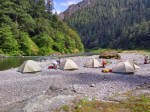
My wife, Becky, and I booked this trip back in January through Momentum River Expeditions in Ashland Oregon. We had been looking for a trail running vacation and after comparing the few guided options available, decided on Momentum’s and convinced a couple of our friends to join us. We love trail running and to make this an actual vacation, we wanted to be able to run for a few days in a beautiful location while not worrying about carrying gear, setting up camp or cooking every day. This trip was exactly that. On guided trips, there are several areas where things can go wrong. The outfitter can have too many rules and be so restrictive that it’s hard to have fun or they can be so relaxed that you feel like you’re on your own without much support. From our view, Momentum hit the sweet spot. They provided enough structure to keep everyone going in the right direction safely. The guides allowed people that wanted to run fast to do so while allowing those wanted to move more slowly to do that with no pressure to “hurry up”. It would be easy to turn this into a Momentum River Expeditions advertisement because they are so good at what they do. On a guided trip, another thing that can go wrong is that the client’s personalities can conflict causing the group to splinter. My impression is that this is less common among runners and especially trail runners. Most trail runners I’ve met are easy going and supportive of each other’s effort level while competitive, for the most part, with themselves. Our group of 18 runners from Massachusetts, Colorado, California, New York, North Carolina, Georgia, Washington and Australia ranging in age from the mid twenties to the mid sixties were friendly, fun and supportive of each other’s abilities. A great group to hang out with.
So what was a typical day like? This is hard to describe for a three day trip without getting into a lot of detail because each day is different, but I’ll try. With the exception of the first day when we all met at the pickup point at 9:30 am, the outfitter’s staff would have coffee and tea ready at 7:00 am followed by an awesome gourmet breakfast at 8:00 am on the river bank. I can’t say enough about the quality of the food Momentum put together with direction of chef Orea. The breakfasts, lunches, dinners and desserts were much more than expected. Even the coffee was freshly roasted and pressed. Following breakfast and a trail briefing, each of the runners would roll-up our sleeping pads, breakdown our tents and pack our personal belongings into a dry bag that was issued to us for transport by raft to the next night’s campsite. By 9:15, one of the running guides, usually Jenn Shelton, would take the self-described slower group to the trail to begin the run. Jenn is one of the fastest trail runners in the country and had the record for the fastest 100 mile trail run for a female in the USA from 2007 – 2014. While she has the right to be, she’s not the least bit snobby about her running triumphs while being open in talking about her life stories. She’s supportive of everyone, genuine, direct and fun to be around. The faster group would start 20-30 minutes later and be guided by two other running guides one of whom was usually Pete Wallstrom, the owner of Momentum and an accomplished athlete himself.
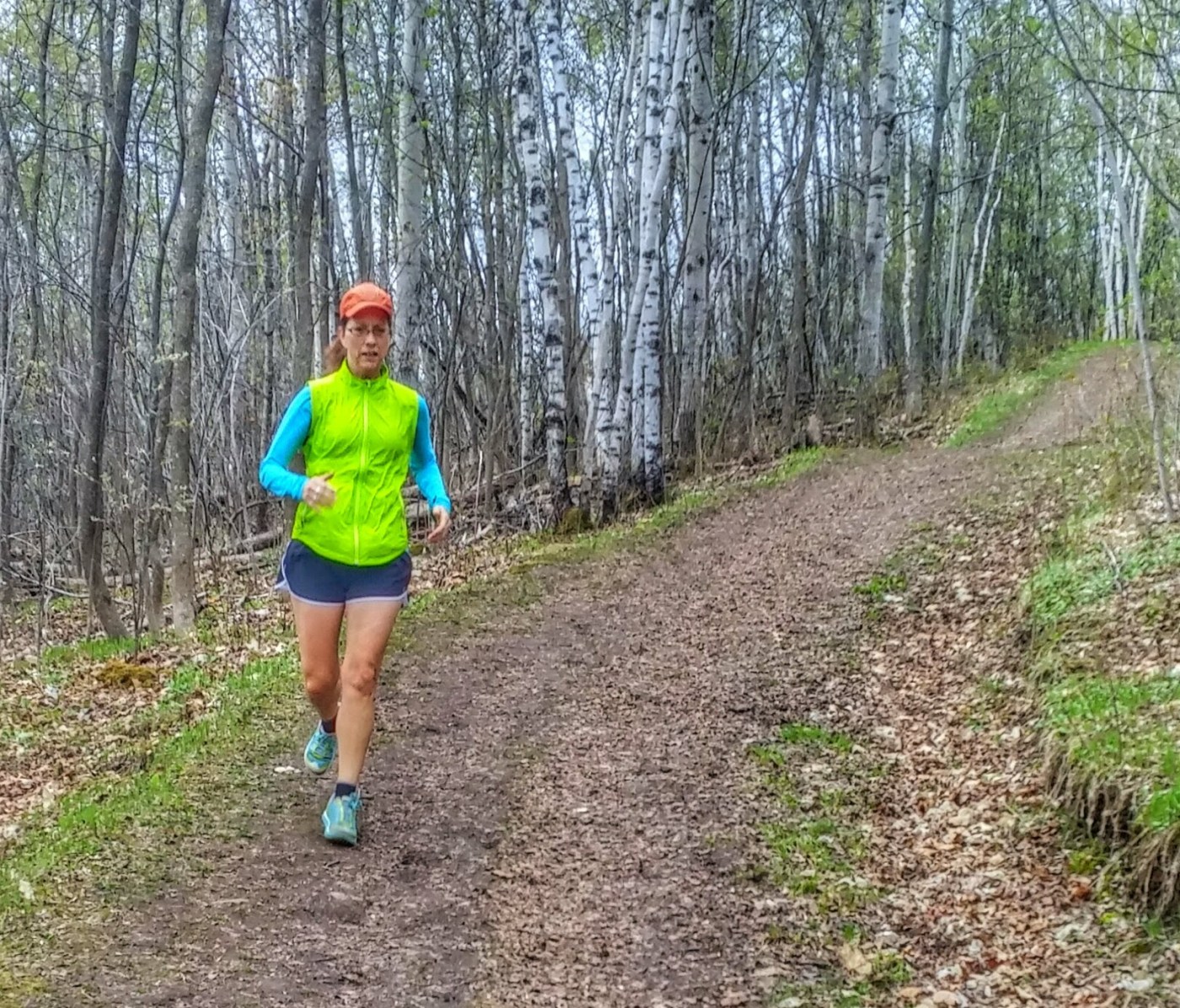
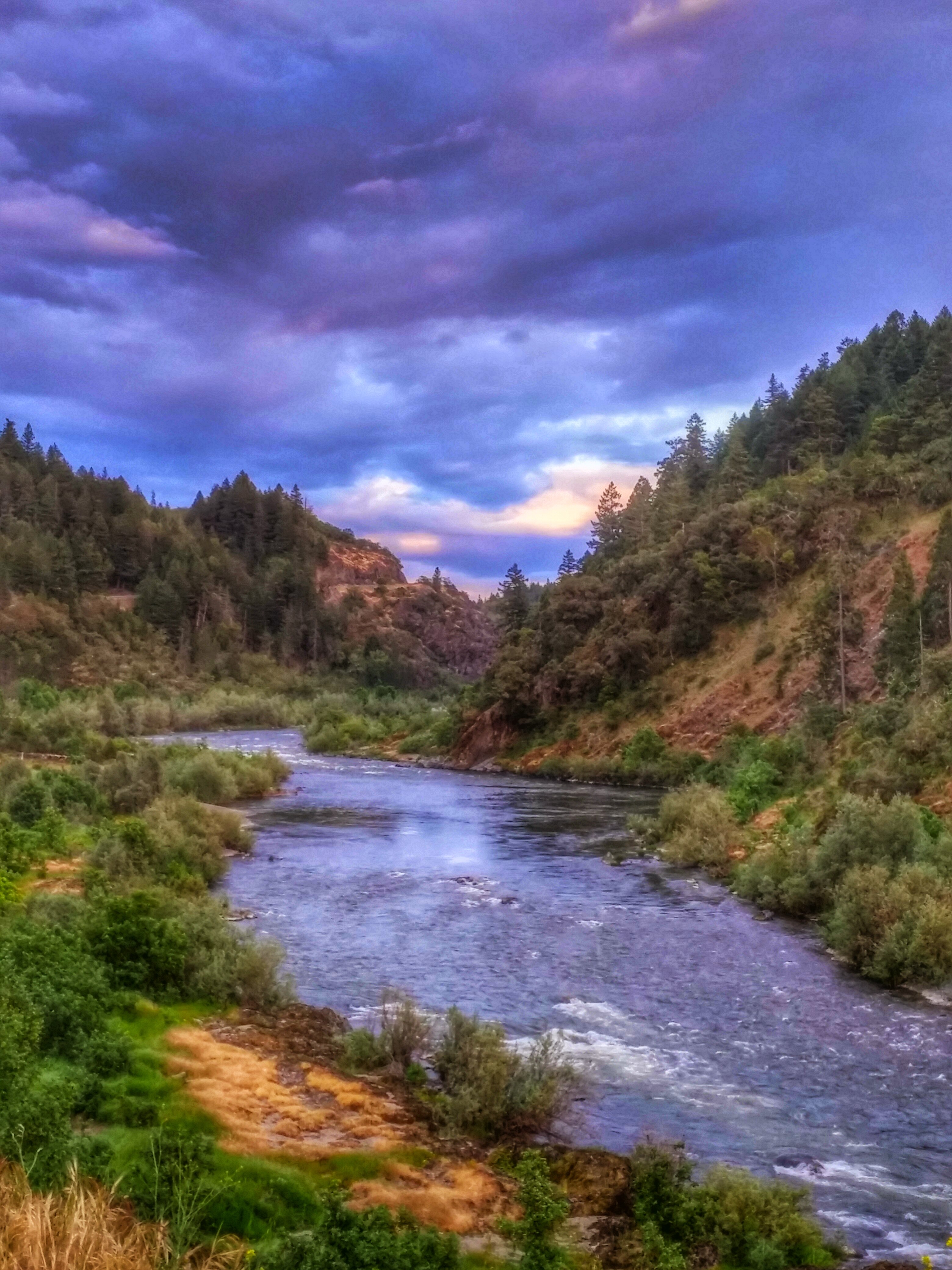
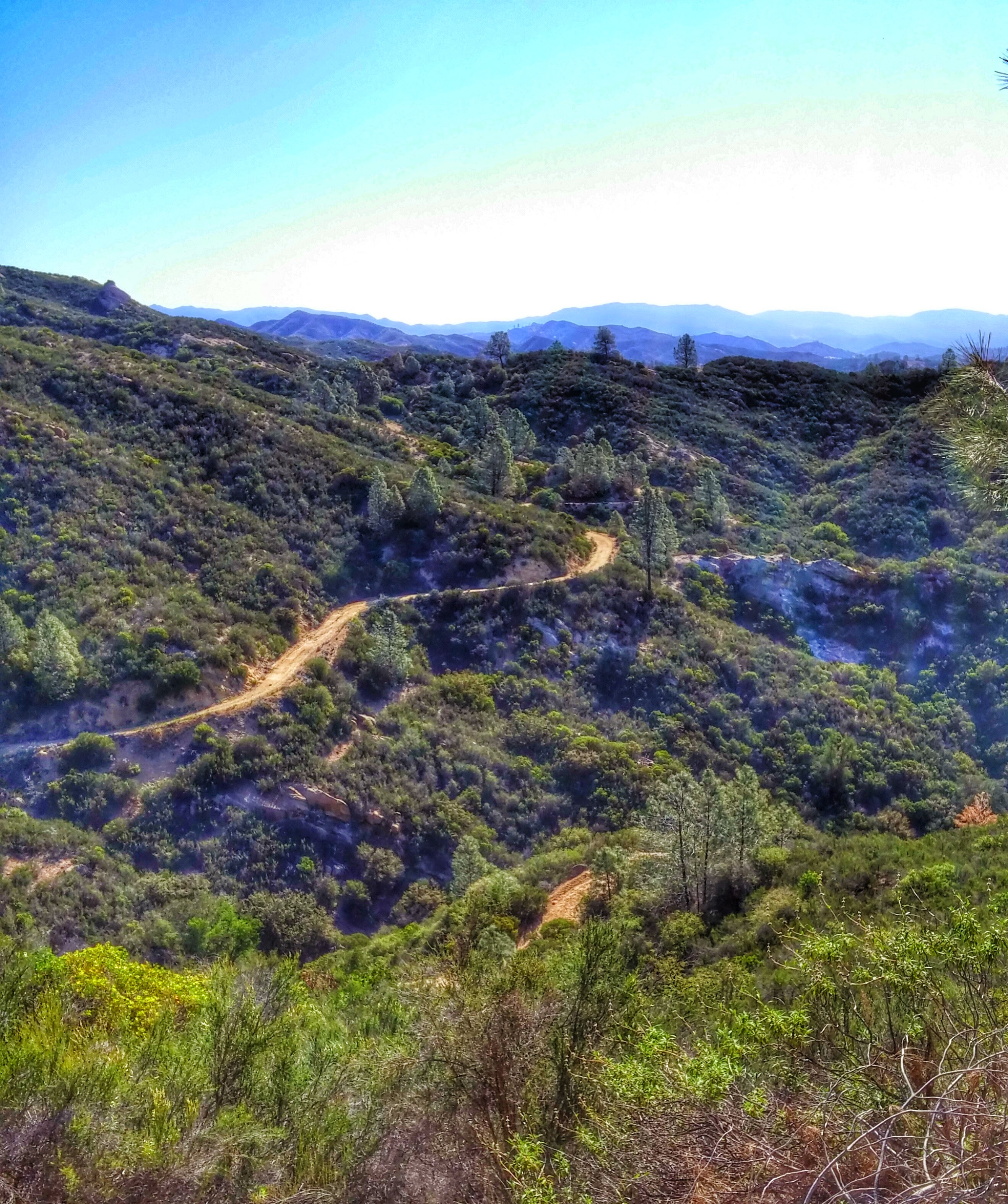
Before beginning the run each morning, the guides set a meeting point somewhere in the middle of the section of the trail to be run that day. All of the runners, fast and slow, and running guides would meet at this location to gather and start the second half of the run. The condition of all the runners was evaluated here to determine if everyone was capable of continuing and if not, to board a raft for the rest of the way downriver to the campsite. To start the run, both the first and second sections, one of the participants would volunteer to lead the group down the trail at a reasonable pace while the guide followed in the middle of the pack to make sure all were progressing without difficulty. There was no pressure to run faster than was comfortable for anyone. The Rogue River Trail is a wonderfully scenic, well maintained trail with little foot traffic. At least this is true in mid-May. The surface varies from pine bark to a few rocky sections on mostly rolling terrain with only a few significant hills. The trail closely follows the river for nearly the entire length with only occasional deviations. The runners would sometimes find ourselves on some exposed ledges above the river but nothing I would call dangerously narrow. There are many small creeks and streams, some with waterfalls, that cross the trail and flow into the Rogue. In some cases, the waterfalls create icy cold pools in which some of my colleagues immersed themselves. Because the campsites on the Rogue River are first come first served, it’s not possible to know exactly what distance will be run each day. It’s only known that the total will be roughly 40 miles. For my group, we did approximately 11 miles the first day 17 miles the second day and 12 miles on the last day finishing at approximately 1:00 pm. The guides that transport the food and gear get started as early as they can each day in an attempt to acquire the best campsites. These guides, Erik, Sam and Orea were also very experienced, knowledgeable and more than willing to educate and discuss outdoor leadership, environmental law or any other topic they’ve gained experience in over their years of guiding.
At the end of the run each day, usually between 1:00 and 3:00 pm, lunch was awaiting the hungry runners followed by time to hop into the river, read a book, throw a frisbee around or take a nap. Our tents were always setup by the time we arrived at the camp and the cooler of cold drinks was waiting. A gourmet dinner was prepared on each of the first two days with fresh ingredients for both the vegetarians and the carnivores followed by an awesome dessert. Bananas Foster anyone?
Following dinner, we got to know each other better, had a beer or two and headed to sleep to prepare for the next day.The last day of the run ended at around 1:00 pm on Sunday afternoon with everyone tired and happy. After a quick lunch and some celebratory champagne, we boarded the vans for the two hour ride to our cars at the start. For me, the trail was great, the scenery was awesome, the runners were fun to be around, the food was unbelievable and the guides were the best. I think I’ll do this again!
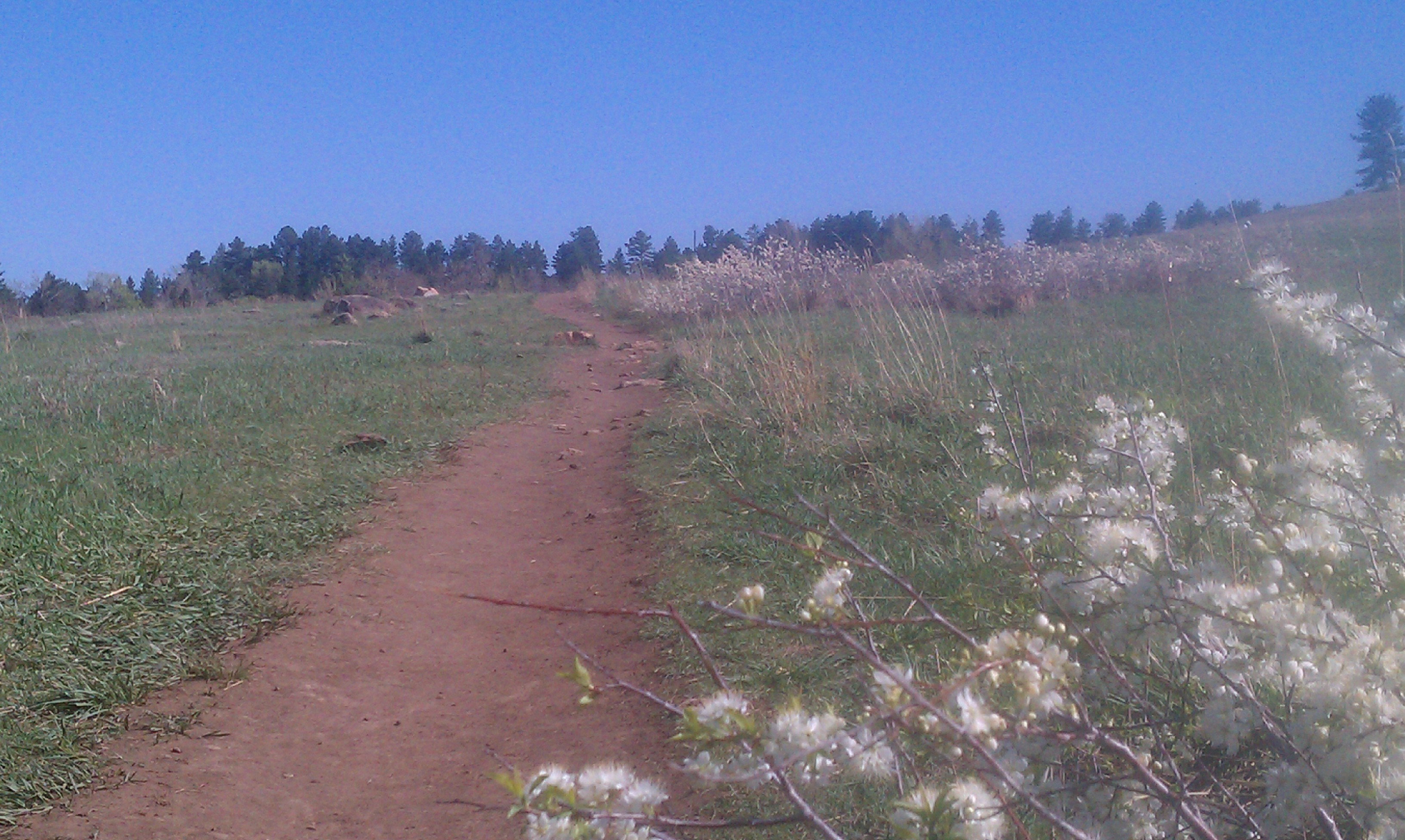
With just 3 weeks to go before my wife Becky and my 3 day, 40 mile run down the Rogue River Trail in Oregon, it’s time to adjust our training strategy. During the week while we’re working, we’ve been continuing a steady dose of daily short runs with one mid-week, mid length run of about 5 miles. On weekends, we’ve been doing at least one long, very difficult run of about 14-15 miles on technical terrain and with 1500 – 2500 feet of elevation gain followed by a 9 or 10 mile run on the second weekend day. This is great training, but we’re finding that the hard run is causing enough strain that the second run on the weekend is lacking in quality because we’re pretty beat up. This level of training would probably have been OK in our 20s but I have to remind myself that we’re in our 50s. Starting this weekend an adjustment is in order.
We will begin doing a long but easy run on Saturday of about 3 hours (roughly 15 miles) followed by another 2 hour easy run on Sunday. The concept behind this change is that the time we spend on our feet during the long run will benefit our endurance without causing the physical damage to our bodies of the technical terrain with lots of climbing and descending. The 2 hour Sunday will run will also give us a chance to practice running on slightly tired legs which will be likely on the 2nd and 3rd day of the Rogue River Run. We also need some additional nutritional practice with gels during the run. At this point Becky tends to use one gel every 45 minutes to keep her energy up while I either have one gel and the start or none at all. Experimenting with more and less calories will help us to refine to the optimal level. Everyone responds differently to training and nutrition so it’s not expected that we will both arrive at the same optimal levels.
Although everyone is different, one of the primary things I’ve noticed as I get older is that I need more recovery time after a run to keep performing at a high level. I could go out and do detailed research on why that is, but for today I’ll just talk about personal experience.
For as long as I can remember, I’ve been a 3-5 day per week runner with a long run and maybe a speed or track workout thrown in. This seemed to work well. Then back in November and December I decided to do an experiment and run every day between Thanksgiving and Christmas to see how that felt. I didn’t do any longer than usual runs. In fact, I ran shorter than normal on many days as my goal was only to run at least one mile every day. I extended my everyday run streak to 40 days and noticed progressive changes as the days piled up. The first thing was that it began to take more time to warm up and feel loose. The standard 7 or 8 minutes turned into 10 to 15 minutes. On some days, I only felt loose for the last few minutes. Also, as I got nearer to the end of my streak, I became continually slower and my legs never felt good.
Finally when the streak ended, I took about a week off from running. My first run back was amazing! My legs felt light and I was running minutes per mile faster than at the end of the streak. The difference was dramatic. It was obvious that to remain a runner in a sustainable way, a certain amount of rest and recovery time between runs, no matter how short, is needed. My new experiment is to determine how much recovery time is optimal. To little will be detrimental to performance and too much won’t provide enough activity to remain fit. The fine tuning will continue forever, I expect…
 eek to the St. Jude Children’s Research Hospital in support of my Chicago Marathon run in October and if they succeeded I would shave my head. To my surprise and gratitude, my generous colleagues donated over $2200 to St. Jude and to be true to my word, I will gladly shave my head. In fact, because I am a big believer in St. Jude and their mission, I would encourage anyone to take a look at what they do and make a donation if you are so inclined. You can check them out here. The scary before and after photos of my head to will be added to the Grand Masters Running blog later in the week!







 Grand Masters Running